Why Do a Day Trip to the Atlas Mountains?
💡 Quick Answer The Atlas Mountains are 45 minutes from Marrakech, close enough for a half-day, rewarding enough to fill a full day. The most popular routes take you through Berber villages, cedar forests, and high mountain valleys with views of North Africa’s highest peak. This guide covers every option, from a quick morning escape to a full Toubkal trek, with honest advice on what’s worth the drive and what’s best skipped. |
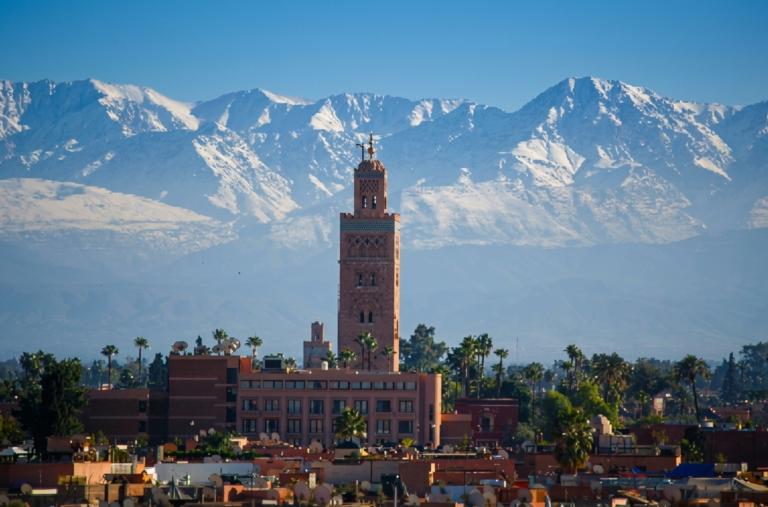
Marrakech sits at the foot of the High Atlas Mountains, home to Jbel Toubkal (4,167m), the highest peak in North Africa. On clear winter mornings, the snow-capped summits are visible from the rooftops of the Medina.
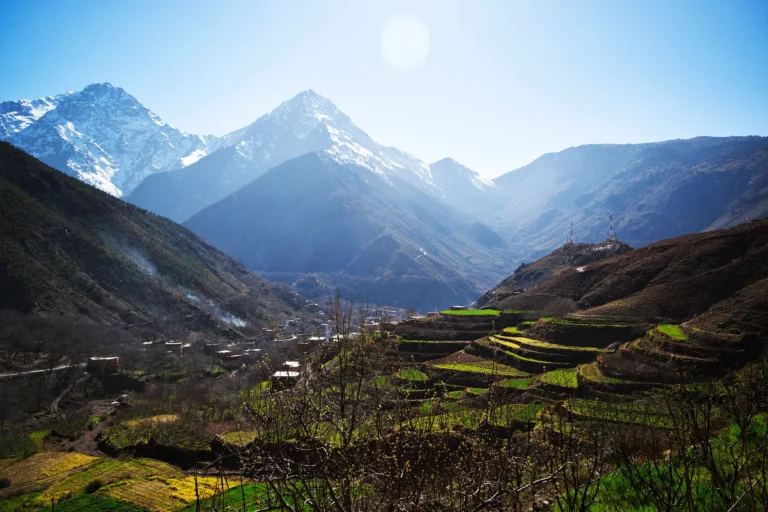
The contrast between Marrakech and the mountains is remarkable. In less than an hour, the city’s busy streets give way to peaceful valleys, traditional Berber villages, rivers, and spectacular mountain scenery.
For visitors with limited time, an Atlas Mountains day trip is one of the best ways to discover Morocco’s natural landscapes alongside its vibrant urban culture. Even a single day in the mountains offers a completely different perspective on the country.
The Best Atlas Mountains Routes from Marrakech
Route 1: The Ourika Valley (1 hour from Marrakech)
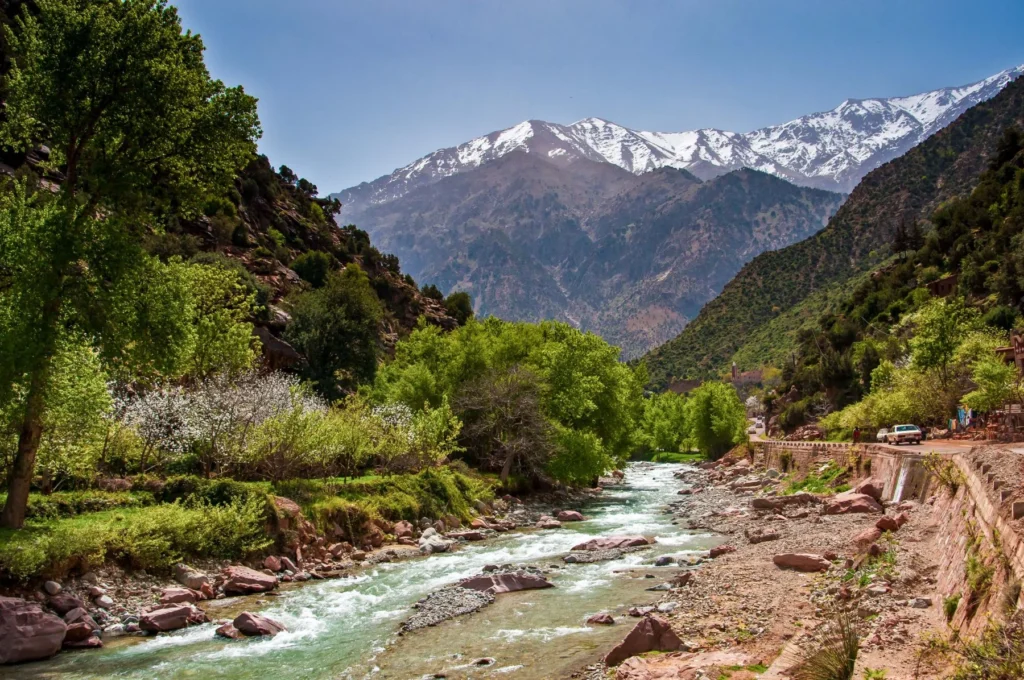
The Ourika Valley is the most accessible Atlas destination from Marrakech, a narrow, green river valley that cuts through the foothills of the High Atlas, lined with Berber villages, small waterfalls, and terraced fields of saffron and herbs.
What makes it special:
- The valley road follows the Ourika River through a succession of increasingly dramatic gorges
- The village of Setti Fatma at the valley’s end is the starting point for a short hike to a series of seven waterfalls
- The Ourika women’s saffron cooperative near Tafza produces some of the finest Moroccan saffron, a worthwhile stop for context and quality purchases
- The Monday market in Aït Ourir, at the valley entrance, is one of the most authentic weekly markets within reach of Marrakech
Best for: First-time Atlas visitors, families, those who want landscape without strenuous hiking Drive from Marrakech: 1 hour
If you want to experience the valley’s famous waterfalls and Berber villages, explore Setti Fatma.
Full guide: Read our complete Ourika Valley Day Trip guide for everything you need to plan your visit.
Route 2: Imlil & the Toubkal Massif (1.5 hours from Marrakech)
Imlil is the gateway village to Jbel Toubkal, and the starting point for the most dramatic Atlas day trip from Marrakech. Sitting at 1,740 meters, the village itself offers extraordinary views, traditional Berber architecture, and a genuine mountain atmosphere that feels completely removed from the tourist city below.
What makes it special:
- The walk from Imlil to the Kasbah du Toubkal (a further 45 minutes up the valley) passes through apple orchards, terraced fields, and Berber hamlets
- From the Kasbah terrace, the view of the Toubkal massif on clear days is one of the most dramatic in Morocco
- The valley around Imlil is home to traditional Berber communities whose way of life has remained largely unchanged for centuries
- Experienced hikers can attempt the summit of Toubkal as an overnight trip, the mountain hut is at 3,207 meters and the summit requires two days
Best for: Hikers, photography, those wanting serious mountain immersion Drive from Marrakech: 1.5 hours
Full guide: Read our complete Imlil & Toubkal Day Trip guide for trail maps, difficulty ratings, and what to bring.
Route 3: Aït Benhaddou (2.5 hours from Marrakech)
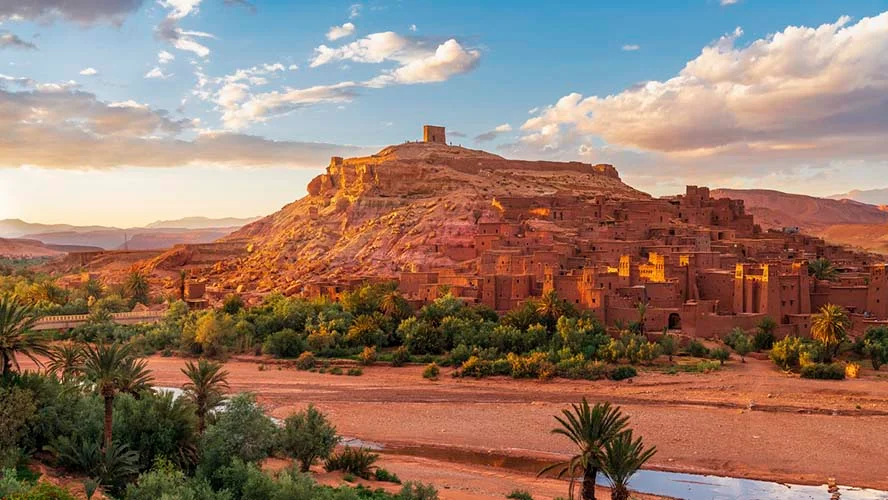
Technically at the edge of a comfortable day trip, Aït Benhaddou is worth the drive for those who can manage an early start. This UNESCO World Heritage Site, a fortified clay city (ksar) on the ancient caravan route between the Sahara and Marrakech, is one of the most visually extraordinary places in Morocco.
What makes it special:
- The ksar has been used as a film location for dozens of major productions: Gladiator, Game of Thrones, The Mummy, because its appearance is virtually unchanged from the medieval period
- Crossing the river to reach the ksar (on foot, via stepping stones or a shallow ford) is part of the experience
- The surrounding Draa Valley landscape, red rock, palm groves, the snow-capped Atlas behind, is genuinely spectacular
Best for: History enthusiasts, film location visitors, those combining with an Ouarzazate stop Drive from Marrakech: 2.5 hours (via the Tizi n’Tichka mountain pass, itself worth the journey)
Full guide: Read our complete Aït Benhaddou Day Trip guide for visitor tips and how to combine it with the Tizi n’Tichka pass.
Route 4:The Tizi n’Tichka Pass
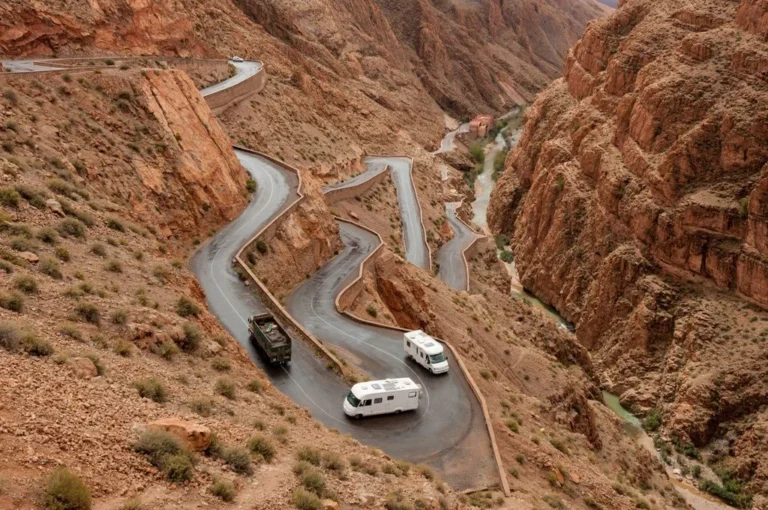
Even without a specific destination, the drive over the Tizi n’Tichka pass, the highest road pass in North Africa at 2,260 meters, is a destination in itself. The road climbs from the Marrakech plain through increasingly dramatic high mountain scenery, past traditional Berber villages perched on impossibly steep slopes, to a summit where the air is noticeably thinner and the views extend in every direction.
What makes it special:
- The pass road itself is one of the most scenic drives in Morocco
- Several roadside cooperatives sell locally produced argan oil, saffron, and mineral crystals
- In winter and early spring, the high sections of the pass are snow-covered, an extraordinary contrast with the warmth of Marrakech below
Best for: Scenic drives, combining with Aït Benhaddou, photography
Drive from Marrakech to summit: 2 hours
What to Expect on an Atlas Day Trip
The Landscape
The Atlas Mountains offer a landscape that most visitors don’t associate with Morocco, green valleys, snow-capped peaks, rushing rivers, and dense cedar forests at higher elevations.
The contrast with the Saharan imagery of the pre-trip imagination is one of the most pleasant surprises of a Marrakech visit.
The Berber Villages
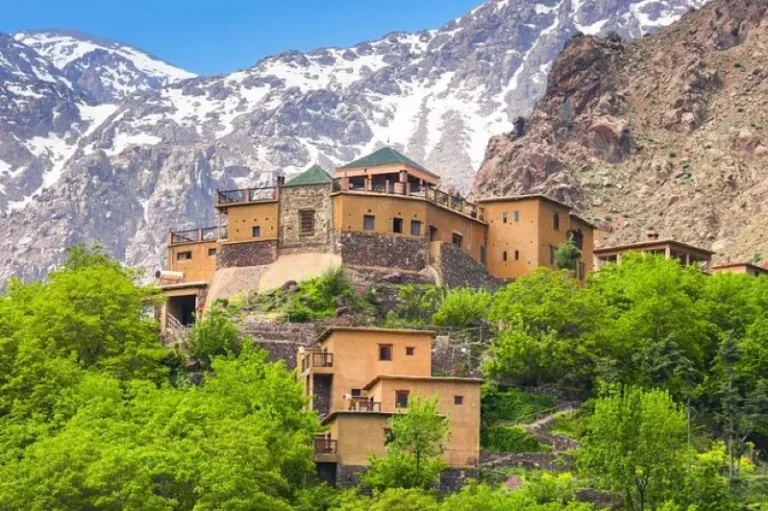
The High Atlas is home to the Amazigh (Berber) people, Morocco’s indigenous population, whose presence in the mountains predates the Arab arrival by millennia. The villages along the main Atlas routes are living communities, not tourist reconstructions.
Mud-brick houses built into the hillside, terraced fields irrigated by ancient water channel systems, women in traditional dress carrying goods on their backs, this is everyday life at altitude, not a performance staged for visitors.
A note on photography: Always ask before photographing people in the villages. A respectful approach, and a basic greeting in Tamazight (azul means hello), is appreciated and almost always welcomed.
The Food
Lunch in the Atlas Mountains is one of the highlights of the day trip. Most villages along the main routes have simple restaurants serving tagines cooked over charcoal, fresh bread baked in clay ovens, and Moroccan mint tea.
The food is straightforward and excellent, lamb tagine with prunes and almonds, chicken with preserved lemons, seasonal vegetable couscous.
Budget: A full lunch with tea costs 80–120 MAD per person in most village restaurants.
How to Get There: Your Options
Organized Day Trip with a Private Guide
The most comfortable and rewarding way to experience the Atlas Mountains from Marrakech. A private guide handles all logistics: transport, route planning, village introductions, lunch recommendations, and provides cultural context that transforms the landscape from scenery into story.
Atlas Mountains day trip from Marrakech is fully private and entirely customizable, the route, the pace, the stops, and the duration are built around your interests and schedule.
Our licensed private guides have been working in the Atlas for years and know the villages, the trails, and the people.
Shared Tour
Several operators in Marrakech run shared minibus tours to the Atlas, typically combining two or three destinations in a single day. These are significantly cheaper than private tours but offer less flexibility, less depth, and less personal attention. They also tend to include stops at fixed souvenir shops.
Self-Drive
Renting a car in Marrakech and driving to the Atlas independently is possible and gives maximum flexibility. The roads to Ourika and Imlil are well-paved and manageable in a standard vehicle. The Tizi n’Tichka pass requires more confidence on mountain roads. A 4WD is recommended for any track driving beyond the paved routes.
Note: International driving licence required. GPS or offline maps are essential, mobile signals are intermittent in the mountains.
Grand Taxi
Shared grand taxis from Marrakech’s Bab er Rob taxi stand run to Ourika and Imlil regularly. This is the most local and least expensive option, but involves negotiation, waiting for the taxi to fill, and limited flexibility on timing.
Practical Tips for 2026
What to wear The Atlas Mountains are significantly cooler than Marrakech, in winter, temperatures at altitude can be 15°C lower than in the city. Even in summer, evenings get cold quickly once the sun drops. Bring a layer regardless of the season.
For hiking, comfortable walking shoes with grip are essential. The trails around Setti Fatma and Imlil involve uneven rocky terrain, trainers work for easy paths, and proper hiking boots for anything more demanding.
Best time of year
- March–May: The valleys are green and flowering, temperatures are ideal, rivers are running high from snowmelt
- June–August: Hot in the valleys but cooler at altitude, mornings are the best time for hiking
- September–November: Excellent conditions, harvest season in the saffron-producing villages
- December–February: Snow on the high passes, dramatic winter landscapes, very few tourists, the most atmospheric time for Toubkal
Best time of day Leave Marrakech no later than 8am to reach the mountains before the midday heat (in summer) or before the clouds build over the summits (in spring and autumn). The light on the mountains in the first two hours after sunrise is exceptional for photography.
Not sure which day trip is right for you? Our guide to Marrakech Day Trip Comparison: Atlas vs Agafay vs Essaouira compares all the main options side by side: distances, difficulty, what each delivers, and how to choose based on your time and interests.
Conclusion
A day trip to the Atlas Mountains is one of the most rewarding experiences you can have from Marrakech. Whether you choose the Ourika Valley, Imlil, Aït Benhaddou, or the scenic Tizi n’Tichka Pass, you’ll discover breathtaking landscapes, traditional Berber villages, and a completely different side of Morocco.
Frequently Asked Questions
One day is enough to experience the Ourika Valley or Imlil properly. Aït Benhaddou works as a long day trip with an early start. For Toubkal summit, two days minimum are required, an overnight at the mountain refuge is standard.
Not for the Ourika Valley or a general Imlil visit, the main paths are manageable for most fitness levels. The waterfall hike at Setti Fatma involves some scrambling. The Toubkal summit requires serious fitness and proper preparation.
Water (at least 1.5 liters per person), sunscreen, a warm layer, comfortable shoes, cash in MAD (ATMs are unavailable in the mountains), and a fully charged phone with offline maps downloaded.
Yes, the main tourist routes are safe and well-traveled. For off-track hiking or higher altitude routes, going with a licensed local guide is strongly recommended.
For a broader look at safety across the region, our guide on is Marrakech safe for tourists covers the city side of the question